Russian MS-21-300 Airliner Demonstrates 3800 km Range, Single Engine Take-off
The aircraft is undergoing certification tests for its launch customer, a Russian airline
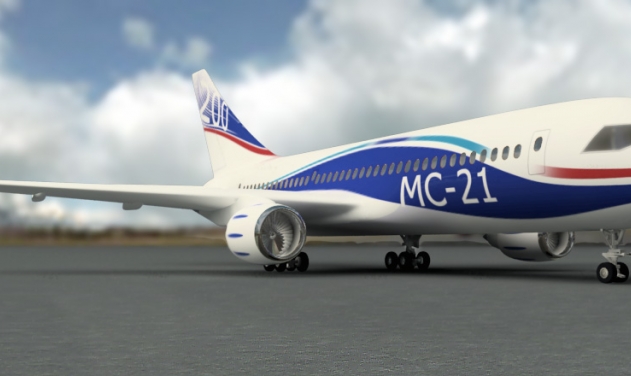
The Russian MS-21-300 airliner which is undergoing certification tests for its launch customer, a Russia-based airline, conducted a series of flights to demonstrate the aircraft's main operational characteristics.
The flights were carried out on a fully import-substituting MS-21-310 aircraft with a payload simulating 175 passengers besides take off on a single engine.
"A range of over 3,800 km was recorded with a payload of 175 passengers, while maintaining a standard reserve fuel supply," said MS-21 Chief Designer Vitaly Naryshkin following the flights.
The long-range flight was carried out using a standard profile that simulated the actual operating mode as closely as possible.
During the flights, the aircraft's ability to take off with one engine failing was also tested. The takeoff distance and rate of climb were within the design parameters.
"We are pleased with the flight results. They were conducted with a payload corresponding to the two-class, 175-seat configuration we agreed upon with the customer for the first batch of MS-21s. We are ready to confirm these results during the aircraft's upcoming certification tests," said Anatoly Gaidansky, First Deputy Managing Director of the Yakovlev Engineering Center which is conducting the certification tests.
"The specified fuel balance, including the aeronautical reserve and all standardized fuel additives for diversion to an alternate airfield, has been maintained," noted Yakovlev PJSC Flight Test Director, Honored Test Pilot of the Russian Federation, and Hero of Russia Roman Taskaev.
"Airworthiness standards require that the failure of one engine should not result in critical consequences at any stage of flight, including takeoff. For a twin-engine aircraft, this is the most critical parameter, limiting the maximum takeoff weight," explained Pavel Sokut, head of the civil aircraft flight test department at Yakovlev.

First Serially Produced Russian MC-21-300 Aircraft Ready for Delivery to Customer
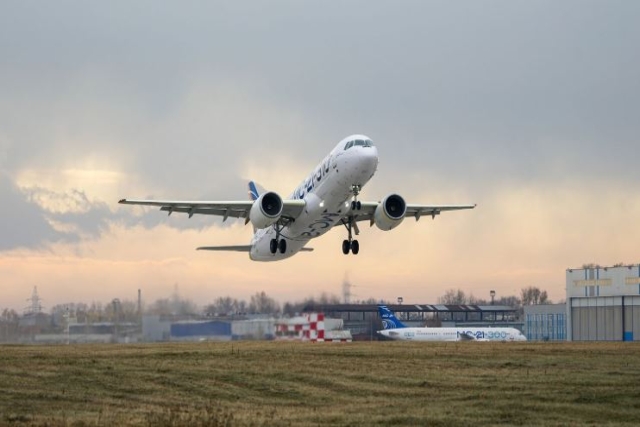
Second Russian MC-21 Import-substituted Aircraft Takes to Flight
Three Russian Airlines Sign up to Buy 89 MS-21, SJ-100 & Tu-214

Russia’s MC-21 Airliner Performs Automatic Landing with Indigenous PD-14 Engines
Russian MS-21-300 Airliner Demonstrates 3800 km Range, Single Engine Take-off
KNDS Announces Initial Pubic Offering to Sell 20% of Existing Share Capital
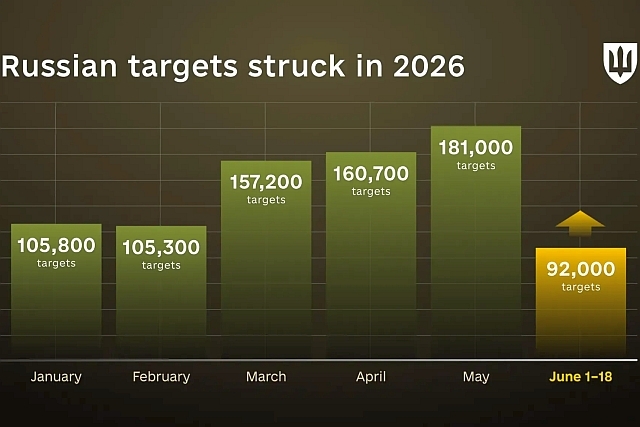
Ukrainian UAVs Attacked Over 800,000 Russian Targets Since January 2026
French DGA Orders 5000 Combat Surveillance Drones from Harmattan AI

One Month Since U.S., Israeli War Against Iran: Who Is Gaining?
One month after the United States and Israel launched coordinated strikes on Iran on February 28 the conflict has expanded...
Modern Tank Showdown: T-90MS, Leopard 2A7, M1E3 Abrams Compared
Main Battle Tanks (MBTs) have shown their mettle in recent conflicts such as in Ukraine despite being increasingly vulnerable to...
European Nations Prioritizing Europe-made IRIS-T & SAMP-T over American Patriot Air Defense Systems?
European nations looking to procure new air defense systems appear to be giving the much-vaunted American Patriot a miss in...
Russian T-90MS Crew Discuss Future Upgrades
Defense Mirror spoke with the crew members of the Russian T-90MS main battle tank, produced by UralVagonZavod

China's Mass-produced J-35A Aircraft Set to Disrupt Global Stealth Fighter Market
China is aiming to disrupt the global stealth fighter market by mass-producing its fifth-generation J-35A at a pace comparable to...

The Future of Combat: Miniaturized Laser Weapons Set to Replace Bullets and Missiles
Lasers may soon replace bullets, and drones could disable enemy UAVs with beams of light instead of missiles