UK Army Unveils Challenger 3 Tank to Rival Russian Armata
The Challenger 3 is Developed by Rheinmetall BAE Systems Land - a joint venture between UK-based BAE Systems and Germany-based Rheinmetall

Challenger 3, the U.K. Army's next-generation main battle tank, has been revealed to the public for the first time during a demonstration at this year's Tankfest.
The MBT made a surprise appearance at The Tank Museum event in Dorset and was presented alongside the in-service Challenger 2 and the original Challenger 1, bringing together three generations in a single display.
Though it is yet to enter service, the 66-tonne armoured powerhouse offered spectators a rare glimpse at the future of the Royal Armoured Corps and demonstrated a step forward in the Army's capability.
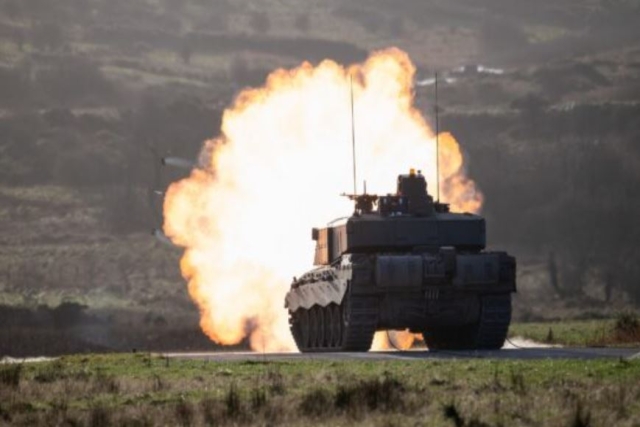
At the event , the Challenger 3 fires live rounds from L55A1 main gun with crew in turret for the first time.
Challenger 3 will be able to take on any potential enemy, including Russia's newest main battle tank, the T-14 Armata, Defence Procurement Minister Maria Eagle had said in a April 2025 statement.
The future of MBTs
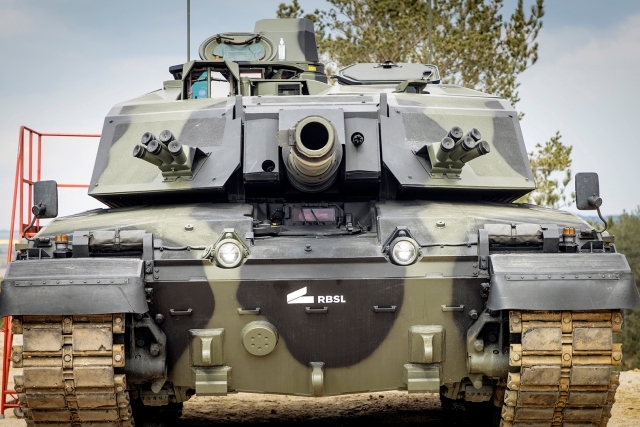
Developed by Rheinmetall BAE Systems Land - a joint venture between UK-based BAE Systems and Germany-based Rheinmetall - Challenger 3 is described as the new MBT for the future.
Designed as a 24-hour, all-weather tank, it is fitted with upgraded sights for commanders and gunners, improved tactical communications and enhanced hull protection.
Armaments
Its primary armament is the Rheinmetall 120mm L55A1 smoothbore cannon, which can fire Nato-standard ammunition and is designed to deliver long-range accuracy and penetration.It fires the latest kinetic-energy anti-tank rounds and programmable multipurpose ammunition, including advanced APFSDS rounds – armour-piercing, fin-stabilised, discarding-sabot.
This move brings the British Army into line with other Nato MBTs, increasing interoperability while reducing barrel wear.
Trophy protection system by Rafael
The Challenger 3 tank also uses new modular armour and active protection systems, including the Trophy Active Protection System built by Israel’s Rafael Advanced Defence Systems. It acts as a miniature automated shield around the vehicle.Using radar, it can detect and intercept incoming missiles and anti-tank projectiles, while automatically firing its own intercepting munitions.
British Army's Challenger 3 Tank Completes First-ever Live Firing

KORNET ATGM Destroyed British Challenger Tank in Ukraine

First Loss of British Challenger Tank in Ukraine
Depleted Uranium Shells in Challenger 2 Tanks Meant For Ukraine, Russia Alarmed

Japan to Explore Airbus’ Eurodrone as Maritime Surveillance Anti-submarine Warfare Craft
After Germany, UK Changes Warship Acquisition Plans
UK Army Unveils Challenger 3 Tank to Rival Russian Armata
Poland to Acquire Three A26 Submarines from Saab for $4.8 Billion

One Month Since U.S., Israeli War Against Iran: Who Is Gaining?
One month after the United States and Israel launched coordinated strikes on Iran on February 28 the conflict has expanded...

Modern Tank Showdown: T-90MS, Leopard 2A7, M1E3 Abrams Compared
Main Battle Tanks (MBTs) have shown their mettle in recent conflicts such as in Ukraine despite being increasingly vulnerable to...
European Nations Prioritizing Europe-made IRIS-T & SAMP-T over American Patriot Air Defense Systems?
European nations looking to procure new air defense systems appear to be giving the much-vaunted American Patriot a miss in...

Russian T-90MS Crew Discuss Future Upgrades
Defense Mirror spoke with the crew members of the Russian T-90MS main battle tank, produced by UralVagonZavod

China's Mass-produced J-35A Aircraft Set to Disrupt Global Stealth Fighter Market
China is aiming to disrupt the global stealth fighter market by mass-producing its fifth-generation J-35A at a pace comparable to...

The Future of Combat: Miniaturized Laser Weapons Set to Replace Bullets and Missiles
Lasers may soon replace bullets, and drones could disable enemy UAVs with beams of light instead of missiles